Broad study continues
Moves into Year 8 under the new structure as the first cohort on the revised pathway.
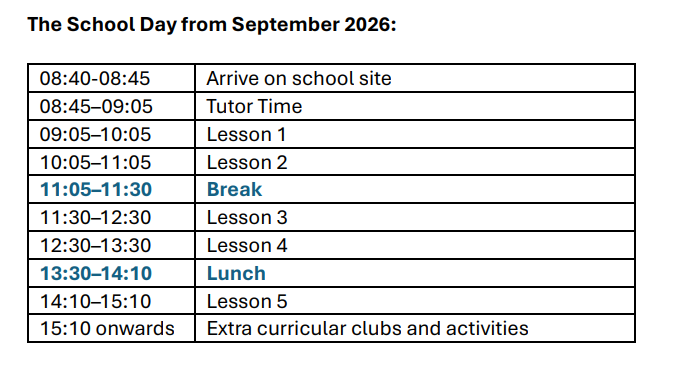
We are making some significant and positive changes to how the curriculum is structured at Yateley School. From September 2026, students will move to five 60-minute lessons each day — meaning every subject is taught at least once every week, creating a steadier rhythm, better continuity and a clearer journey from Year 7 all the way through to Sixth Form.
This page is your guide to everything that is changing. You will find a full explanation of the new school day, a section for each year group with a downloadable letter, curriculum visuals and answers to the most common questions. Select your child’s year group below to jump straight to what is relevant for your family.
Select the year group your child will be in from September 2026 — not their current year. Each card explains what changes for them specifically.
Moves into Year 8 under the new structure as the first cohort on the revised pathway.
Broad study continues while students begin preparing their Year 9 Deeper Study choices.
Students move into GCSE choices with support, guidance and clear next steps.
GCSE courses continue with a steadier weekly pattern across subjects.
Students complete GCSEs as planned and move towards clearer post-16 next steps.
Sixth Form study gains more regular taught contact time and a clearer weekly pattern.
The changes are designed to improve consistency, strengthen curriculum flow across the week and provide clearer progression from Key Stage 3 through to Sixth Form.
Five one-hour lessons create a steadier weekly rhythm and reduce long gaps between lessons.
All subjects taught at least once every week — routines are easier to establish and knowledge stays fresher.
A more structured journey with year-specific explanations from broad study through to Sixth Form.
Each year group has a dedicated explanation and downloadable letter so families can find exactly what they need.
The same overall length — just structured more clearly. Five 60-minute lessons, a 25-minute break and a 40-minute lunch.
A stronger rhythm to the day: arrival, tutor time, two lessons, break, two lessons, lunch, final lesson.
The school day does not become longer. The start time does not change. The difference is how time is organised within the day.
Quick answers for parents and carers.
No. The overall length of the school day remains exactly the same — only the structure of the timetable changes.
No. Deeper Study shapes the Year 9 curriculum only and does not determine later GCSE choices.
For some students in Years 10–11, Mastery may be recommended: three GCSE options plus additional English, Maths and wider experiences.
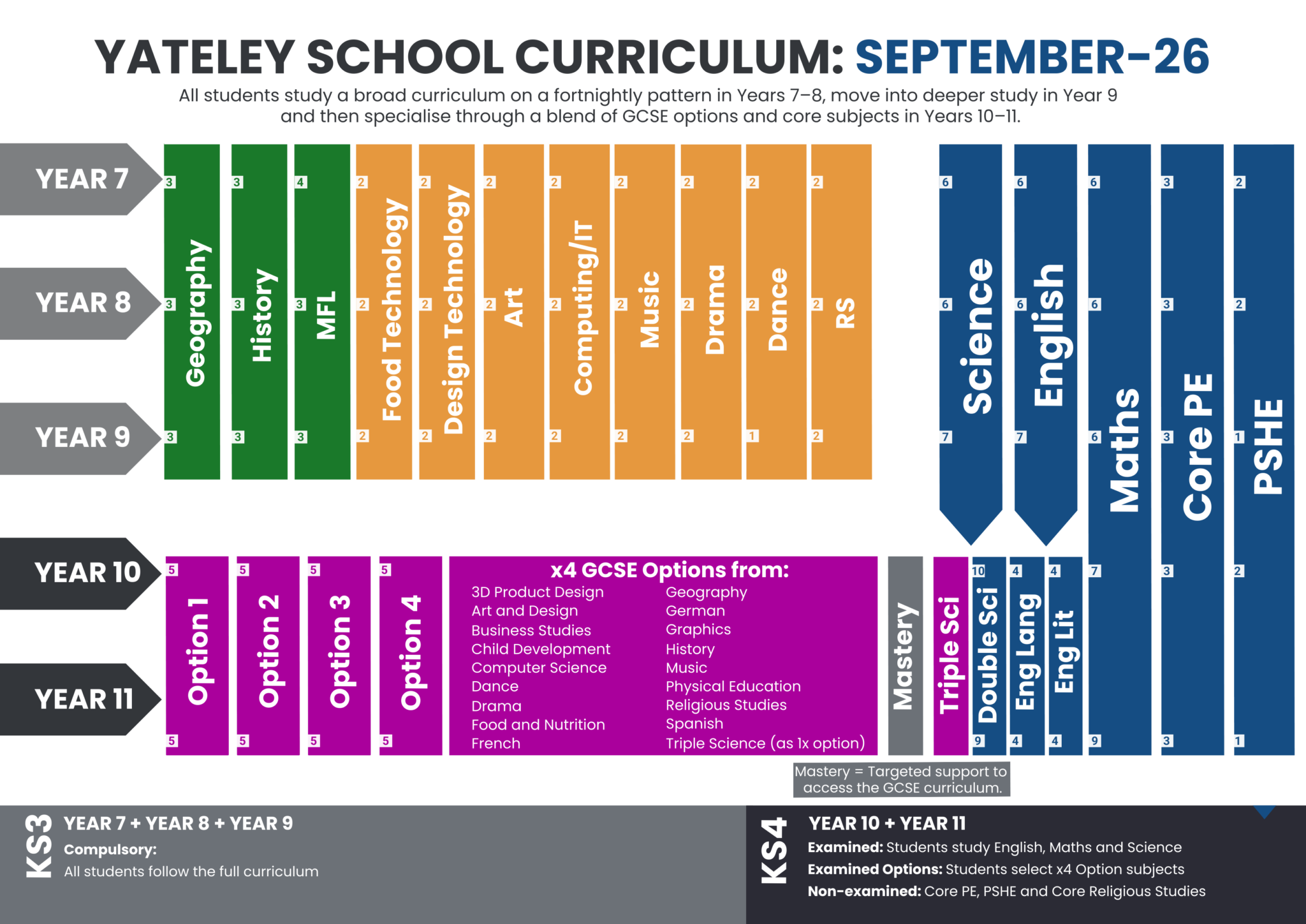
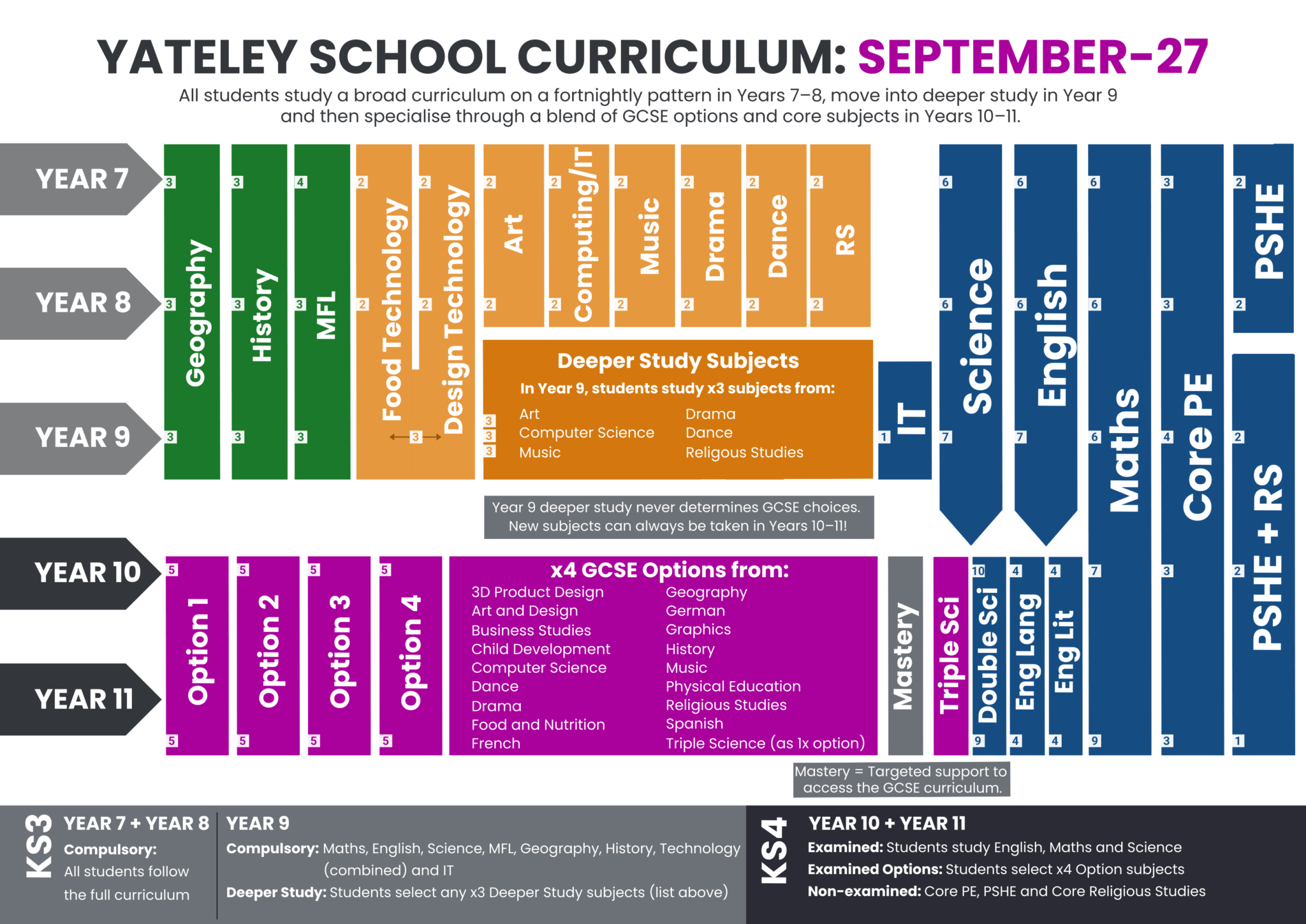
See the full curriculum journey mapped out visually alongside the year-group letters.

The first phase of the curriculum model and how the new structure begins.
Open full visual ↗
The later phase showing how the full curriculum model develops over time.
Open full visual ↗Every letter and document in one place.
Get in touch and we will be happy to help.
From September 2026, Year 7 students move into Year 8 under the new structure — the first cohort on the revised pathway, while continuing to study a broad range of subjects.
The timetable structure, with a clearer weekly pattern and more regular subject contact.
Students continue a wide curriculum in Year 8 rather than narrowing too early.
Supports continuity, routine and stronger curriculum sequencing across the week.
Read the year-group letter for the full explanation of how this first stage works.
Year 8 students continue to study broadly, but begin considering subjects for Year 9 Deeper Study — three subjects from an available list.
Three subjects chosen to form the Year 9 Deeper Study programme.
These choices shape Year 9 only — GCSE options remain open later.
Teachers help students reflect on interests, enjoyment and confidence.
An earlier opportunity to shape learning while keeping the curriculum broad.
Year 9 students move into the GCSE options process with support from events, assemblies, tutors and teaching staff. Mastery may be recommended for some.
Students receive support to make informed choices about their next stage.
A three-GCSE-option route with additional support and wider opportunities for some.
PSHE runs once per fortnight for 60 minutes in 2026–27, with a drop-down day to restore time.
Students move onto a pathway that is ambitious, realistic and well suited to their needs.
Year 10 students continue GCSE studies within a timetable that gives all subjects a steadier weekly rhythm, supporting consistency in exam courses.
Students remain on their established GCSE pathways.
Subjects taught with greater regularity across the week.
Supports retrieval, sequencing and retention across GCSE learning.
Read the year-group letter for the full detail and context.
Year 11 students complete their GCSE routes with more regular weekly subject contact and a clearer transition into post-16 education.
Students continue their existing courses as planned.
The year-group letter explains the transition thinking for Sixth Form.
A steadier weekly pattern supports consistency in the final stage of exam preparation.
Open the year-group letter for the full explanation.
Sixth Form students gain more regular taught contact time and a clearer weekly pattern, strengthening consistency and supporting academic progress.
Increased curriculum contact across the week.
A more coherent week that is easier to plan around.
Greater regularity helps sustain momentum in advanced courses.
Open the Sixth Form letter for the full explanation.
No. The overall length remains the same and the start time does not change.
So every subject can be taught at least once per week, improving continuity and knowledge retention.
No. Deeper Study is for the Year 9 curriculum only — GCSE choices remain open.
Options Evening, assemblies, taster lessons, tutors and teachers all support Year 9 students.
For some students in Years 10–11: three GCSE options plus additional English, Maths support and wider experiences.
Yes. Year 9 PSHE runs once per fortnight for 60 minutes in 2026–27 with a drop-down day to restore time.